
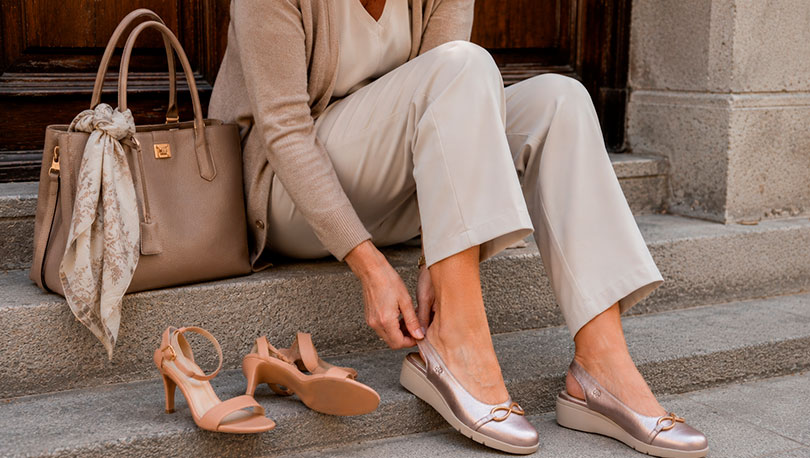
Choosing comfortable shoes seems easy… until it isn’t. We’ve all experienced that moment when a beautiful pair of shoes becomes our worst enemy within ten minutes of wearing them. Blisters, calluses, tired feet, the feeling of “I can’t take it anymore.” And the worst part: we often think it’s normal, that “they’ll mold to your feet.”
But the reality is different: comfort isn’t a luxury, it’s a necessity. And not just to feel good, but to take care of our health, our posture, and our daily energy.
In this guide, we’ll tell you what makes a shoe truly comfortable, how to choose one based on your lifestyle, and what details make all the difference. Everything is explained clearly, simply, and practically.
Why is comfort so important in shoes?
The comfort of footwear is not just a matter of aesthetics or personal preference. It directly affects:
- Foot health: an unsuitable shoe can cause bunions, plantar fasciitis, blisters or ingrown toenails.
- Body posture: if the foot is not properly supported, the body compensates… and back, knee or hip pains appear.
- Daily energy: walking uncomfortably is tiring. Walking comfortably is energizing.
- Mood: Yes, uncomfortable shoes can ruin your day.
In short: good shoes are an investment in well-being.
What makes a shoe comfortable: the 7 key factors
Comfort isn’t a coincidence. It’s the result of several elements working together. Here are the most important ones.
1. The last: the heart of the shoe
The shoe last is the internal shape on which the shoe is constructed. If the last doesn’t fit your foot, it doesn’t matter the material, brand, or price: it won’t be comfortable.
A good shoe last should:
- Respect the natural width of the foot
- Allow the fingers to move
- Do not compress the instep
- To complement the shape of the arch
If you feel pressure in any area when you try it on, don’t expect it to “give in.” The fit won’t change.
2. The materials: natural, flexible and breathable
The materials make the difference between a shoe that adapts to you and one that forces you to adapt to it.
The most comfortable ones are usually:
- Natural leather: molds to the foot and allows perspiration.
- Natural fabrics: cotton, linen or breathable technical fibers.
- Cushioned insoles: high-density foam, memory foam, or natural latex.
Avoid rigid or plastic materials that do not breathe and cause chafing.
3. The sole: cushioning and stability
A comfortable sole should offer:
- Cushioning to absorb the impact while walking
- Flexibility to support the natural movement of the foot
- Grip to prevent slipping
- Stability to avoid straining ankles and knees
Soles that are too hard or too soft are often problematic. Balance is key.
4. The weight of the shoe
Heavy shoes are tiring. Lightweight shoes are comfortable. Lightness is especially important in:
- Walking shoes
- Urban sneakers
- Everyday shoes
If you notice when you lift it that it weighs more than you expected, it probably won’t be your best friend.
5. The fit: neither loose nor tight
A comfortable shoe should support without constricting. Look for:
- Adjustable closures (laces, Velcro, buckles)
- Instep that doesn’t constrict
- Heel securely fastened to prevent slipping
If the foot moves around inside the shoe, blisters will appear. If it’s too tight, pain will develop.
6. The height of the heel (even if you don’t wear heels)
The ideal height for comfortable walking is usually between 1 and 4 cm. Why?
- Slightly raise your heel
- Reduces tension in the Achilles tendon
- Improves posture
- Avoid loading the plant of the pie
Completely flat shoes can be inconvenient as they are very high.
7. The plant: the great secret of comfort
A good shoe can transform a normal shoe into a comfortable one.
Search for templates:
- Padded
- Breathable
- With bow support
- Removable (so you can change them if needed)
If you have specific needs, such as flat feet or high arches, a suitable insole makes all the difference.
How to choose comfortable shoes according to your lifestyle
Not all feet are the same, and neither are all routines. Here are some recommendations based on your daily life.
For those who walk a lot
- Flexible but stable sole
- Amortiguación media-alta
- Breathable materials
- Cushioned insole
- Lightweight
For those who spend many hours on their feet
- Sole with good shock absorption
- Anatomical insole
- Wide fit
- Low heel (2–4 cm)
- Soft materials that don’t put pressure on you
For those who work in an office
- Lightweight shoes
- Flexible sole
- Natural materials
- A design that allows for mobility without sacrificing style.
For those who seek style without sacrificing comfort
- Wide heels or wedges
- Lightweight platforms
- Soft leather
- Cushioned insoles
- Lasts that respect the width of the foot
Signs that a shoe is NOT comfortable (even if you like it)
- It grips you from the first minute
- You feel pressure in your fingers
- The heel slips when walking
- The sole is as rigid as a board
- The material does not breathe.
- It causes chafing even with socks.
If any of this happens, it’s not the right shoe for you. And that’s okay: the perfect shoe does exist, you just have to find it.
How to care for your shoes so they stay comfortable
Comfort also lasts over time. Some tips:
- Alternate footwear so that they do not become deformed
- Use shoe trees to maintain the shape
- Cleanses and nourishes the skin to keep it supple.
- Change the insoles when they lose cushioning
- Store your shoes in ventilated places
A well-cared-for shoe lasts longer… and remains comfortable.
Conclusion: Comfort is a form of self-care
Choosing comfortable shoes isn’t a whim. It’s a way to take care of yourself, walk better, feel good, and enjoy your day more. When you find footwear that respects your feet, your posture, and your pace, you notice it. And so does your body.
FAQ – Frequently Asked Questions about Shoe Comfort
🟩 How do I know if a shoe is comfortable from the first moment?
If you don’t feel any pressure when you try it on, your toes move freely, and your heel is secure, that’s a good sign. You should feel comfortable from the start.
🟩 Are leather shoes always more comfortable?
Not always, but they tend to fit the foot better and allow for breathability. The quality of the leather makes a big difference.
🟩 Is it bad to wear completely flat shoes?
They can be if they don’t offer arch support. Ideally, there should be a slight heel lift.
🟩 What can I do if a shoe rubs against my foot?
You can use protectors, suitable socks or anti-friction creams, but if the problem is the shoe last, it won’t be completely solved.
🟩 How often should I change the templates?
It depends on usage, but normally every 6–12 months.
We know that when a customer finds a comfortable shoe, they come back. That’s why at Treintas we design collections that generate confidence, loyalty, and well-being.
👉 If you’re a distributor or retailer and want to offer footwear that makes a difference, discover more at treintas.es. Comfort also builds lasting relationships.